
Starting Muay Thai later in life
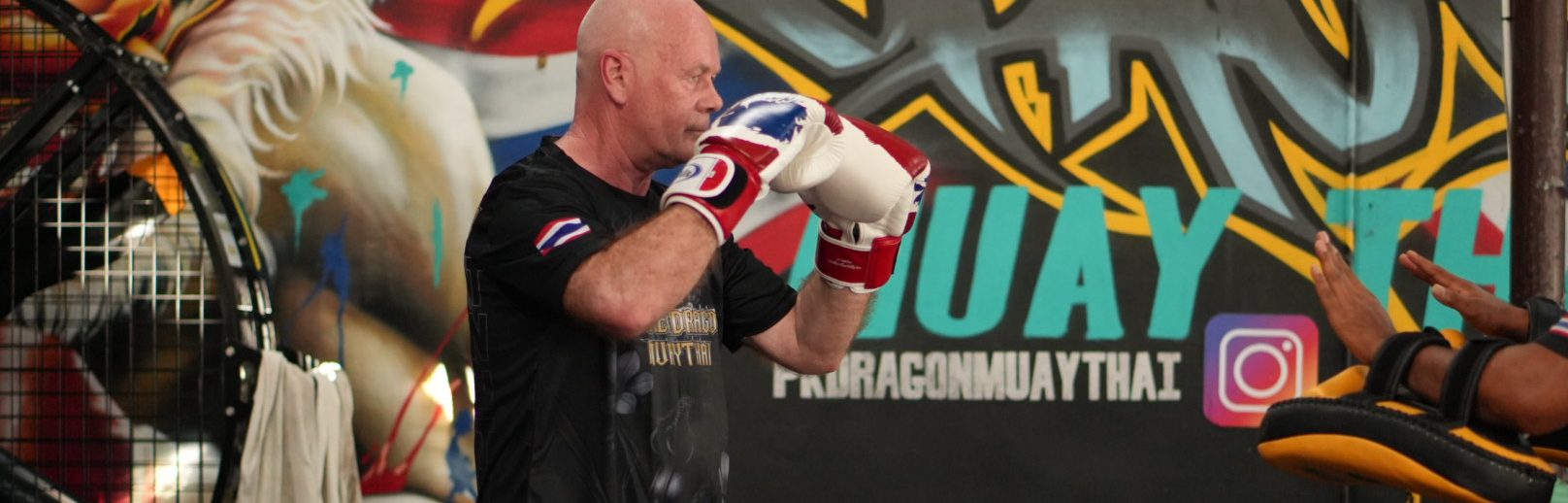
When you start Muay Thai later in life, the hardest part ins't physical.
It's walking into the gym for the first time, not knowing what to expect, and not quite knowing how you'll fit into what's already happening.
Everything feels new at once. The space. The rythm. The people. The movement.
Even if you've watched videos or read about it beforehand, none of that fully prepares you for what it actually feels like in the room.
And that's where most of the uncertainty comes from.
The first sessions.
The first few sessions are not dramatic. There's no moment where everything clicks. No immediate sense of progress.
Instead, it feels:
- slightly confusing
- slightly awkward
- harder to follow than expected
You're trying to:
- remember what you've just been shown
- coordinate movements that don't come naturally yet
- keep track of what your body is doing
All the while being aware that other people seem to know what's going on. That combiination can feel uncomfortable - especially at first.
What feels difficult
What surprised me wasn't the physical effort - it was coordination.
Even simple things:
- a basic jab
- a step and turn
- holding a guard
felt unfamiliar.
Not because they were complicated, but because they were new.
There's a tendency at this stage to assume:
"I'm not picking this up quickly enough"
But that isn't really what's happening.
You're just learning something that your body hasn't done before.
The first thing that became obvious
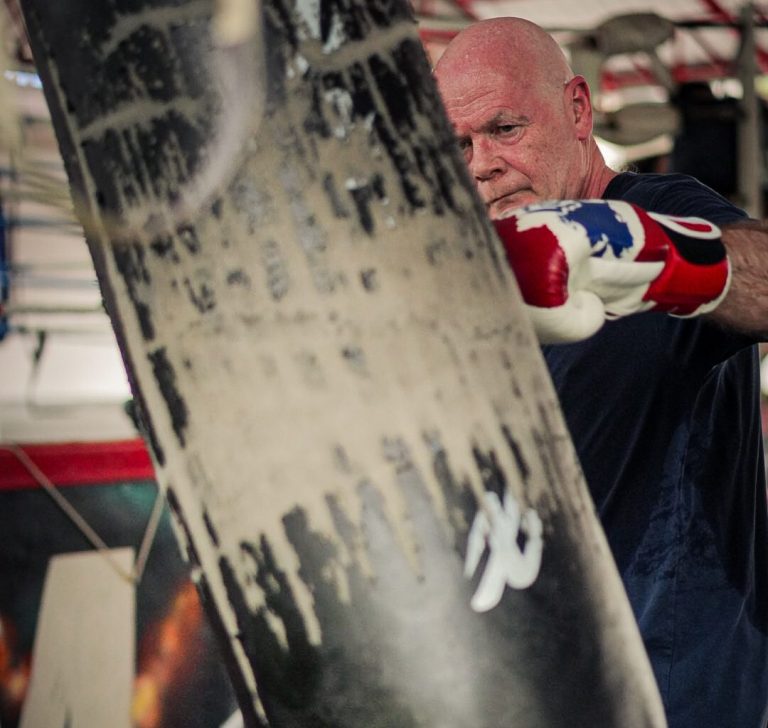
Thai trainers are exceptionally good at reading people.
Within minutes, trainers knew who was new, who needed more explanation, and who needed to slow down - often before people realised it themselves.
What surprised me was how quietly this was handled.
There were no labels. No announcements. No separation of "beginners" from everyone else. Adjustments happened through small changes; a different drill, a softer correction, a nod to stop and rest.
As an older beginner, this mattered enormously. I never felt exposed, but I also never felt ignored.
That balance is difficult to achieve, and it's something Thai trainers seem to have internalised through years of experience.
The tone of instruction
Instruction in Thailand is practical and understated.
There's no motivational speech, no encouragement to "push harder", no attempt to manufacture intensity. Instead, instruction is continuous and calm.
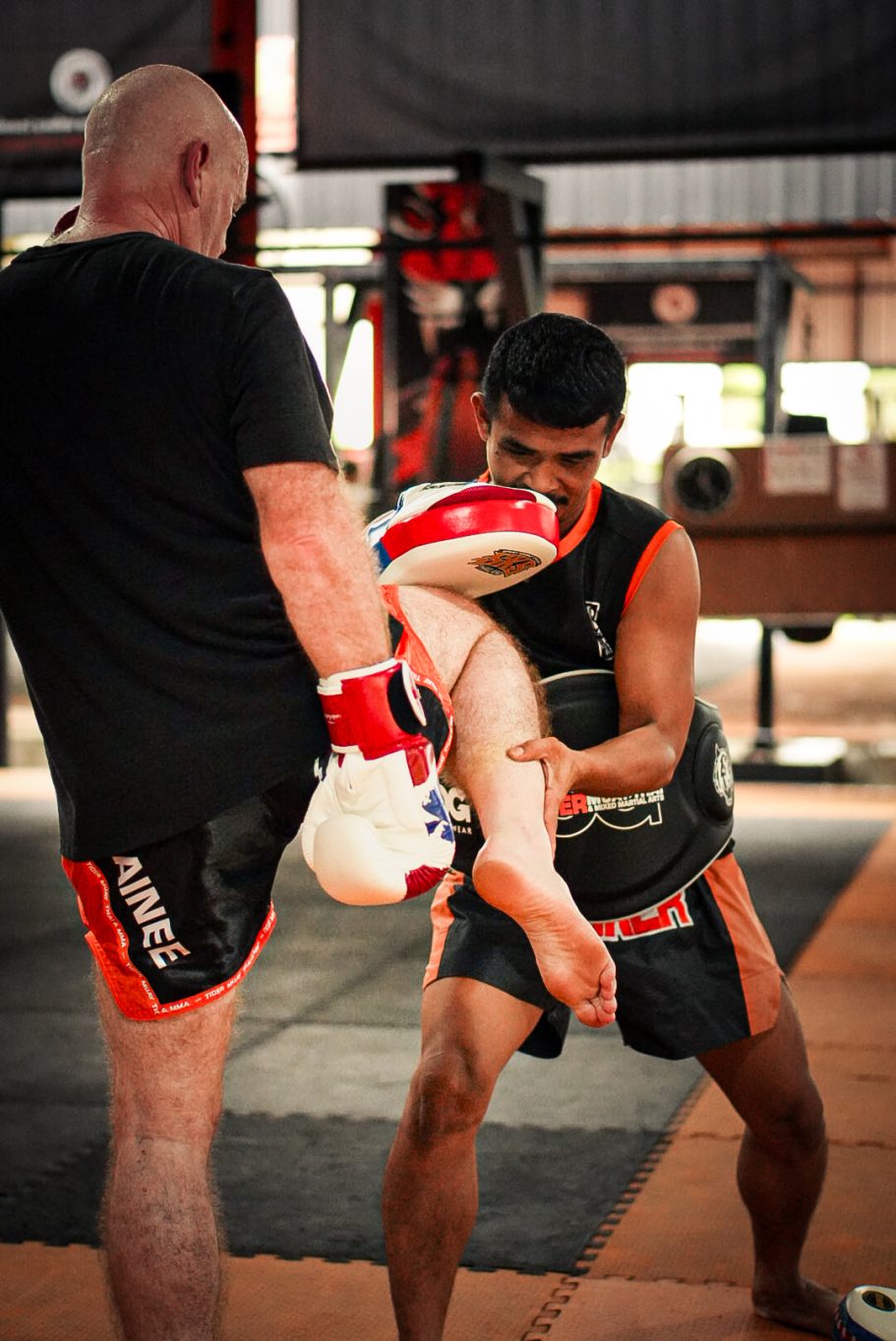
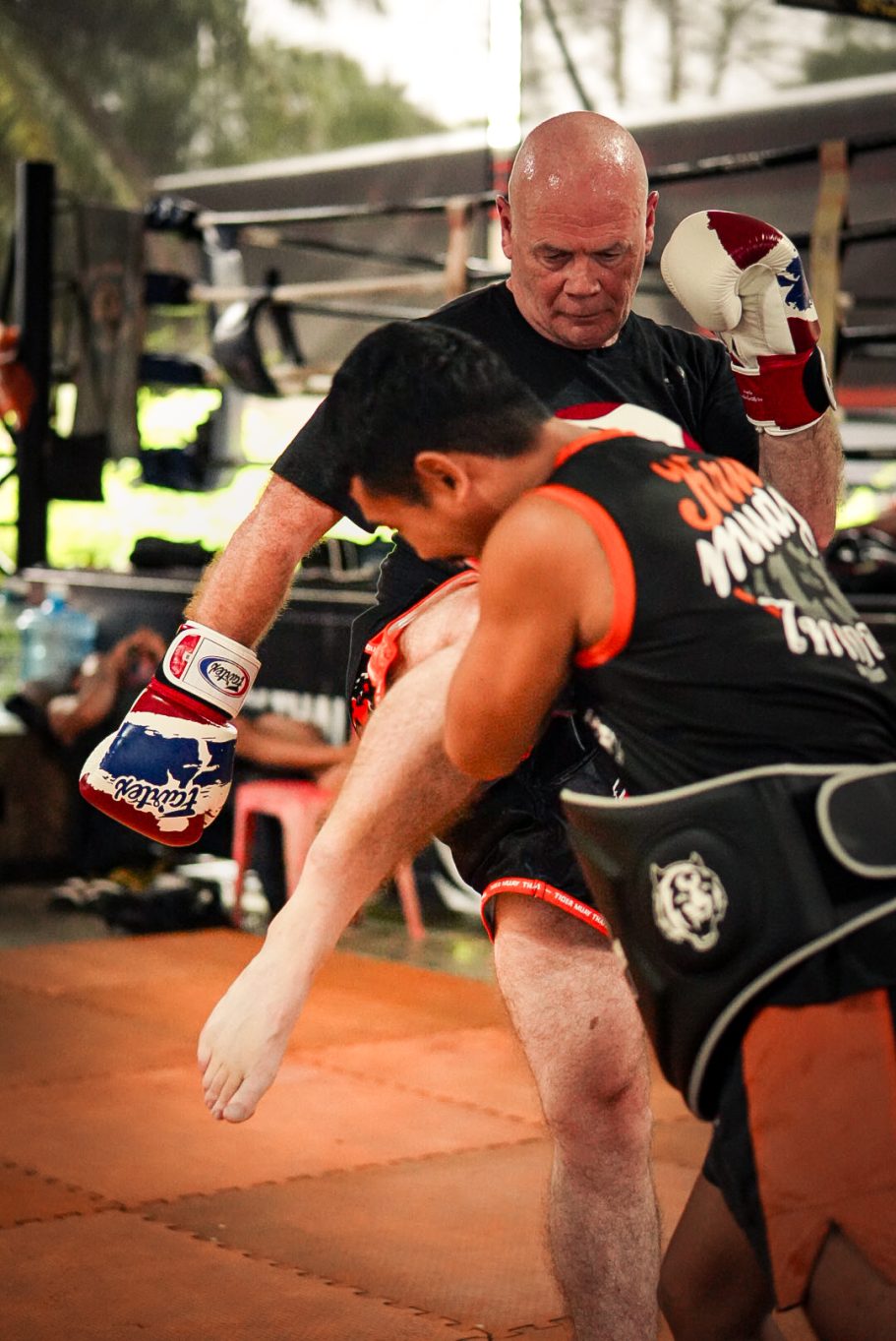
Corrections are constant, but they're delivered without drama. A hand moves your guard. A foot repositioned. A pad is angled differently. Very little is made of it.
Mistakes are treated as information, not failure. As a beginner - particularly later in life - this tone is reassuring. It creates an environment where learning feels normal rather than stressful.
"Relax"
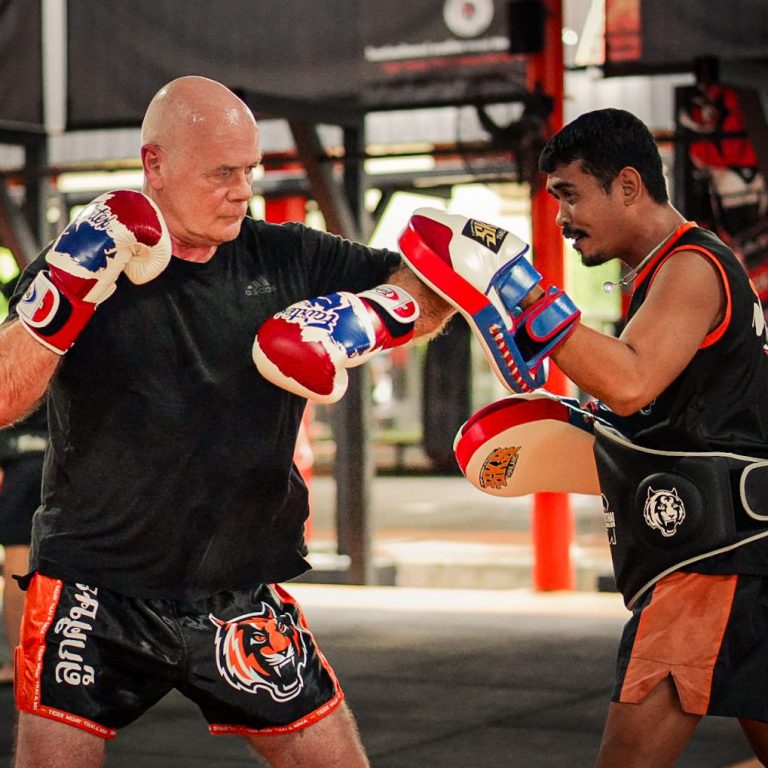
In my rivate sessions, one word cam up more than any other. Relax
At first, I didn't understand it. I wasn't panicking or rushing deliberately. I was concentrating, trying to do things properly.
Over time, it became clear that I was bringing unnecessary urgency to my movements - bigger actions than needed, rushing combinations, using effort where positioning would have been enough.
Relaxation, in this context, wasn't about being casual or disengaged. It was about efficiency.
Smaller movements.
Better balance.
Less wasted energy.
For an older body, the difference is immediate. Fatigue becomes more manageable, recovery between rounds improves, and movements feel more controlled.
Technique before intensity
Another noticeable difference was the emphasis on technique before intensity.
In beginner training, techniques are broken down carefully:
tarting Muay Thai later in life isn't dramatic. It's incremental.
- where your feet are placed
- how your weight is distributed
- what the non-striking hand is doing
- how balance is recovered after each movement
Nothign is rushed.
In fact, rushing tends to attract correction rather than praise.
This approach protects beginners - particularly older ones - from injury. Poor technique combined with effort is where problems usually arise.
Here, effort is secondary to understanding.
Repetition
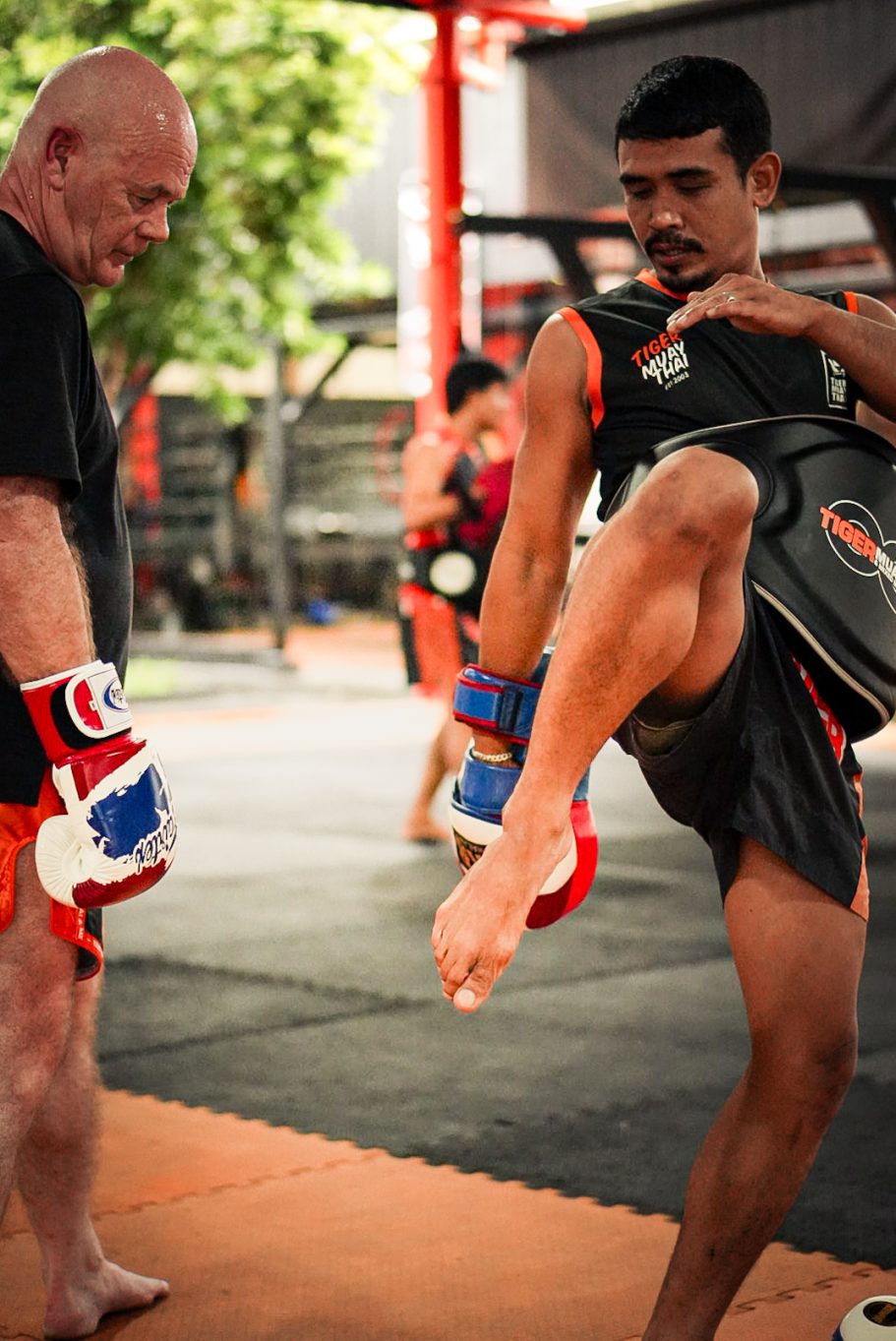
Repetition sits at the heart of how beginners are taught in Thailand.
At first, this can feel slow. The same movements repeated again and again, often with only small variations.
But repitition is where understanding develops.
Over time, I noticed movements becoming smaller and more economical. Balance returned more quickly. Fatigue felt more manageable. Transitions between techniques improved.
None of this came from pushing harder. It came from allowing the body time to learn.
For people starting later in life, this approach suits both mody and mindset.
Group classes and privates
I initially worried that group classes would be too chaotic or impersonal.
In practice, well-run group classes in Thailand provide an excellent learning environment. Mixed levels are managed thoughtfully. Beginners are given tasks and space to wotk at their own pace.
If you need to stop, you stop.
If you need to watch, you watch.
Private sessions serve a different purpose. They aren't about doing more Muay Thai - they're about doing it more clearly.
Many of the lessons that made group classes feel more manageable later came from one-to-one instruction.
What beginner training in Thailand is not
Beginner training in Thailand is not about toughness.
It isn't constant sparring.
It isn't forced exhaustion.
It isn't about proving resilience.
There is no assumption that beginners want to fight. There is no expectation that everyone should train every day.
Training is demanding - but it's purposeful.
Why this works later in life
As we get older, brute force becomes less forgiving. Structure, balance, and awareness matter more.
Thai teaching methods emphasise exactly these qualities. When applied patiently, they allow people to train consistently without unnecessary strain.
This may explain why Muay Thai, despite its reputation, can be surprisingly suitable for people later in life - when it is taught properly.
Thailand as a learning environment
Despite being seen as teh home of elite fighters, Thailand is also a place where beginners are normal.
Being new isn't unusual.
Being older isn't unusual.
Learning slowly isn't unusual.
That normalisation removes a great deal of anxiety.
You're not behind. You're just learning.
A realistic takeaway
Training in Thailand showed me that Muay Thai doesn't have to be intimidating.
When taught with patience and structure, it becomes accessible, logical, and adaptable - even later in life.
The difference lies not in the art itself, but in how it's introduced.
And that difference matters.
Read more: Articles | Can you start Muay Thai at 50?